
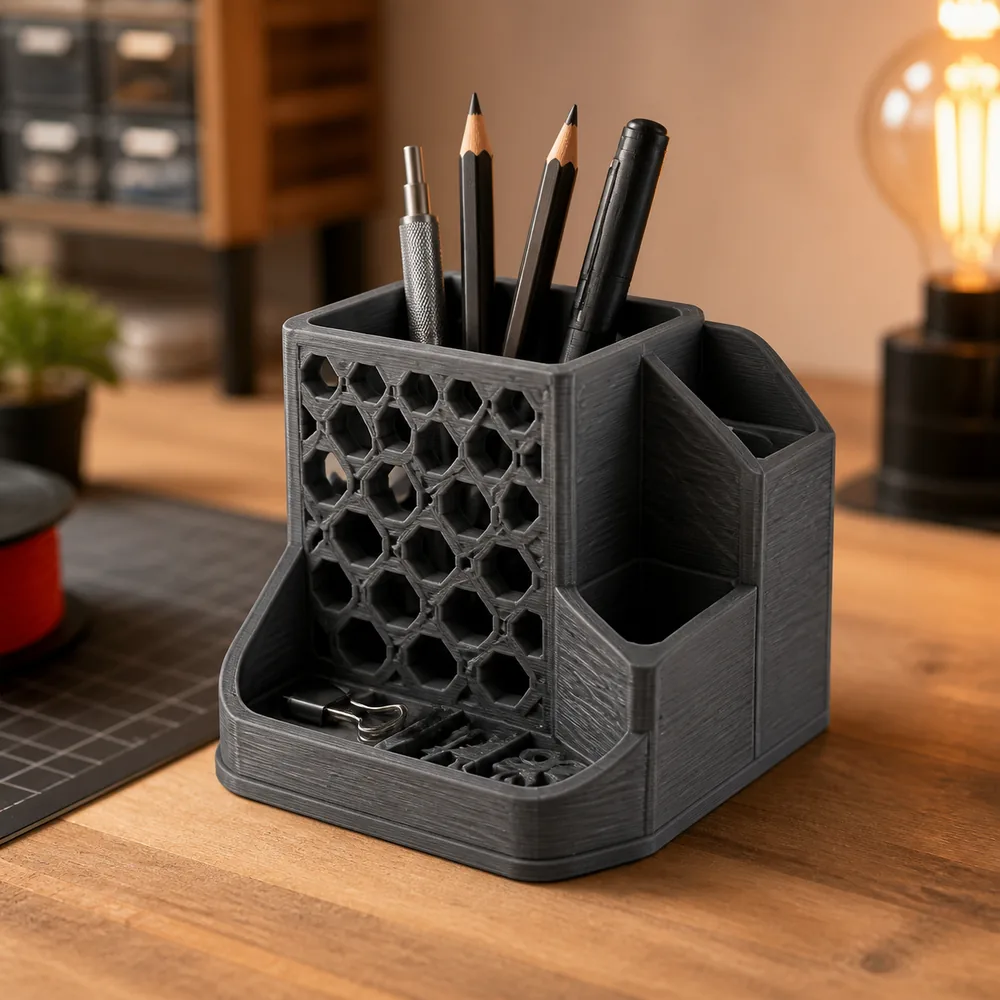
WHAT TO USE / EQUIPMENT FIT

Best Equipment for 3D-Printed Desk Organizers

Choose equipment from the material, size, cycle time, and repeatability required by 3d-printed desk organizers. The current matched starting point is Bambu Lab printers, but confirm work area, safety, availability, service, and total ownership cost before buying.

SETUP3D-Printed Desk Organizers
OPPORTUNITY SCORE76/100
TYPICAL PRICE$29.99
MATERIAL COST$11.59
MAKE TIME210 min

WORKFLOW FIRST

Let the product requirements choose the machine.

Function, fit, and modularity give a small maker more defensible differentiation than generic decorative prints.

Validate the material, finish, and cycle time with a real sample before comparing equipment. Headline specifications cannot replace a workflow test.

01

Equipment-fit checkpoints

  • Reliable dimensional accuracy
  • Build volume for the largest module
  • Material and speed options that preserve acceptable finish
CURRENT MATCHED STARTING POINTBambu Lab printers

Matched from the product and workflow—not a guarantee of earnings.

View matched equipment

DIRECT ANSWERS

Frequently asked questions

What matters most when choosing equipment for 3d-printed desk organizers?

Reliable dimensional accuracy; Build volume for the largest module; Material and speed options that preserve acceptable finish. Confirm the actual material, work area, safety requirements, workflow, service, and total operating cost before buying.

Should a maker buy the fastest machine first?

No. Prove the buyer, price, and repeatable workflow first. Speed creates value only after measured demand is being delayed by a production bottleneck.

Is the matched machine a guarantee of business results?

No. It is a workflow-based starting point. Availability, specifications, material safety, local requirements, and business results can change and must be verified independently.

NEXT STEP

Replace the public reference with your own numbers.

Run the free profit modelFind more opportunities